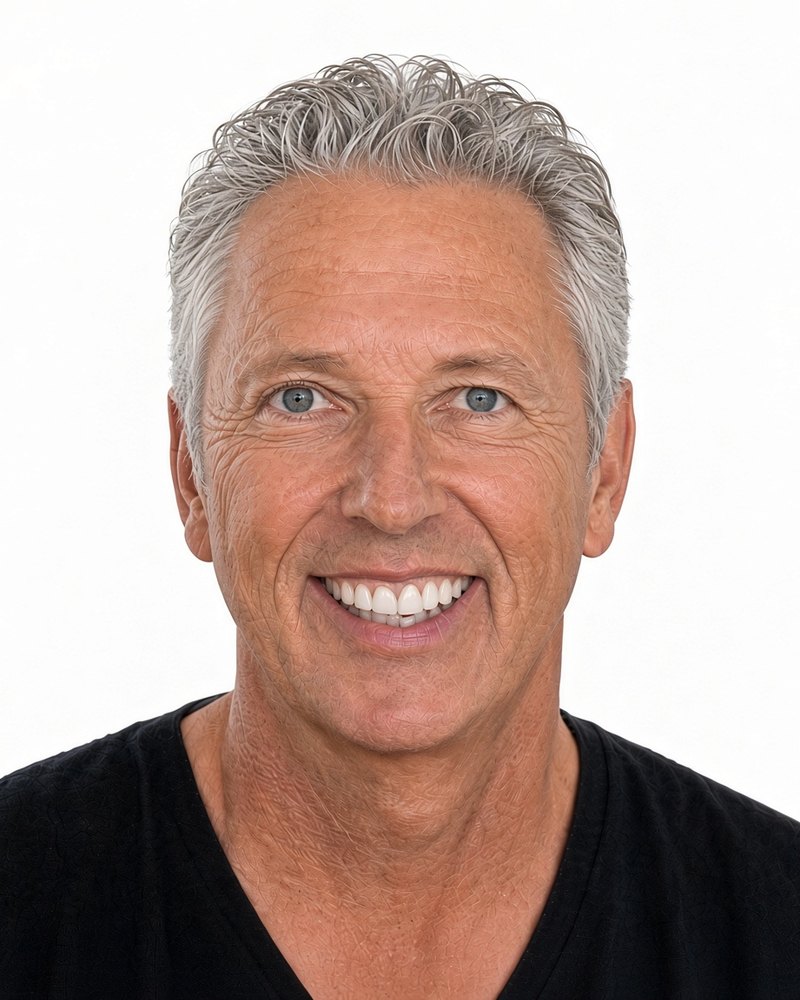
When my older brother was two, he had a high fever that led to a stroke. It left him partly paralysed, and later he struggled with learning at school. My mother, a remarkable woman, threw herself into finding him proper help. Along the way she discovered he had dyslexia.
I was seven or eight at the time. Top of the class in maths. Bottom in English. Barely able to read.
So she got me tested too. Dyslexic as well.
With the help of some very good teachers I eventually learned to read and write. I went on to get degrees in law and commerce, with terrible handwriting and even worse spelling. (If you find a typo on this page, blame my spell check. I do.)
I'm hugely grateful for that diagnosis. And honestly, I'm just as grateful for the dyslexia. For some reason I see connections and patterns other people don't. I see the bigger picture first. I join the dots faster. It's my superpower.
It took me years to realise how many business leaders and owners are wired a bit like me.
Half dyslexia, half ADHD
There's a running joke among the business owners I know: half of us have dyslexia, and the other half have ADHD.
We're overstating it. But not by as much as you'd think.
One well-known study found around 29% of entrepreneurs reported ADHD, against roughly 5% of adults generally. Research out of Cass Business School in London found over a third of entrepreneurs identified as dyslexic. In my experience, ADHD is the more common of the two among the owners and leaders I work with.
Dr Edward Hallowell, one of the leading authorities on ADHD, has suggested it could almost be renamed the entrepreneur's trait. The parts that don't get talked about are the ones that show up in business: creativity, drive, vision, imagination, the ability to see what others miss and run at it.
Dyslexia brings its own set. The big picture. Pattern recognition. Thinking in three dimensions. Solving problems from odd angles.
In a corporate, a lot of that gets treated as a problem to be managed. In business ownership, it's often the engine.
The shadow side
But let's be straight about it. Superpowers come with a shadow side.
The same brain that sees the whole picture in four seconds can find a forty-page report unbearable. The one that runs at a new idea can leave a trail of half-finished things behind it. The owner who's always out ahead of the business can forget that nobody else has seen what they've seen. They get frustrated that the team isn't keeping up, when really the team was never shown where they were going.
None of that is a character flaw. It's wiring. And once you know how you're wired, you can work with it instead of against it.
That's a big part of why I work the way I do. Live, in the room. Big picture first, detail later. Short write-ups people will actually read. And a lot of attention on getting the owner's picture out of their head and into everyone else's. Because I think that way too.
Business is personal
It's not just the wiring that makes owners different, though.
You'll have heard the corporate line: it's not personal, it's just business. Or the bureaucrat's version: it's not personal, it's just the rules.
For owners, business is intensely personal. We know our people. We've met their families. We know our suppliers and our customers by name. There's no view from the 29th floor. The decisions we make land on real people, and we feel it.
We eat last
Simon Sinek wrote a bestselling book about leaders eating last. I haven't read it. I didn't need to. It's been my life for twenty-odd years.
The maths of owning a business is simple. You get what's left over. Everyone else eats first.
Most owners carry memories of the hard times. Selling the car to make the wages. The tax bill on the credit card. Lying awake at 3am running payroll numbers in your head. And the whole family along for the ride, good and bad, however much you try to shelter them.
We are not cogs
Corporates and bureaucracies are machines built to run on interchangeable parts. Qualifications and job titles are the labels on the parts, and after a while the label becomes the identity.
Someone once asked me what qualifications the business owners I work with had. I realised I had no idea. It had never once occurred to me to ask. Owners are in the room because of what they've built, not what's on their CV.
Our tribe
People who haven't done it don't really get it. They haven't taken the personal risk. They haven't eaten last. They haven't put the house on the line.
That's fine. But it means it's up to us to find each other. To find the people, the advisors and the rooms that actually get what we're doing, and how we think.
A weird menagerie of misfits. As Apple's famous 1997 "Think Different" campaign put it: "Here's to the crazy ones. The misfits. The rebels. The troublemakers."
Round pegs in square holes. The ones who see things differently. This is your tribe.
Good luck out there. And don't forget to have fun!