Years ago I worked alongside one of the experts in a leadership community. To me, she came across as aggressive. Pushy. Every conversation felt like a bit of a contest, and I'll be honest, I didn't enjoy them.
What puzzled me was that other people thought she was great.
Then one day, out of nowhere, she admitted something. She felt intimidated by the other experts in the room. She felt like a fake. (She definitely wasn't.) What I'd been reading as aggression was discomfort. I'd been reading the storm as something else entirely... and judging her for it.
If only I had known.
And before anyone thinks I'm pointing fingers, I see it in me too. Not the pushiness so much. With me it's quieter. I pull away. A commercial relationship gets a bit scratchy, and rather than lean in, I go quiet and let it drift, because frankly I just don't want the s#!t. Feels sensible at the time. It isn't. And it's not only an ADHD thing. I'm dyslexic, and I recognise it in me there too.
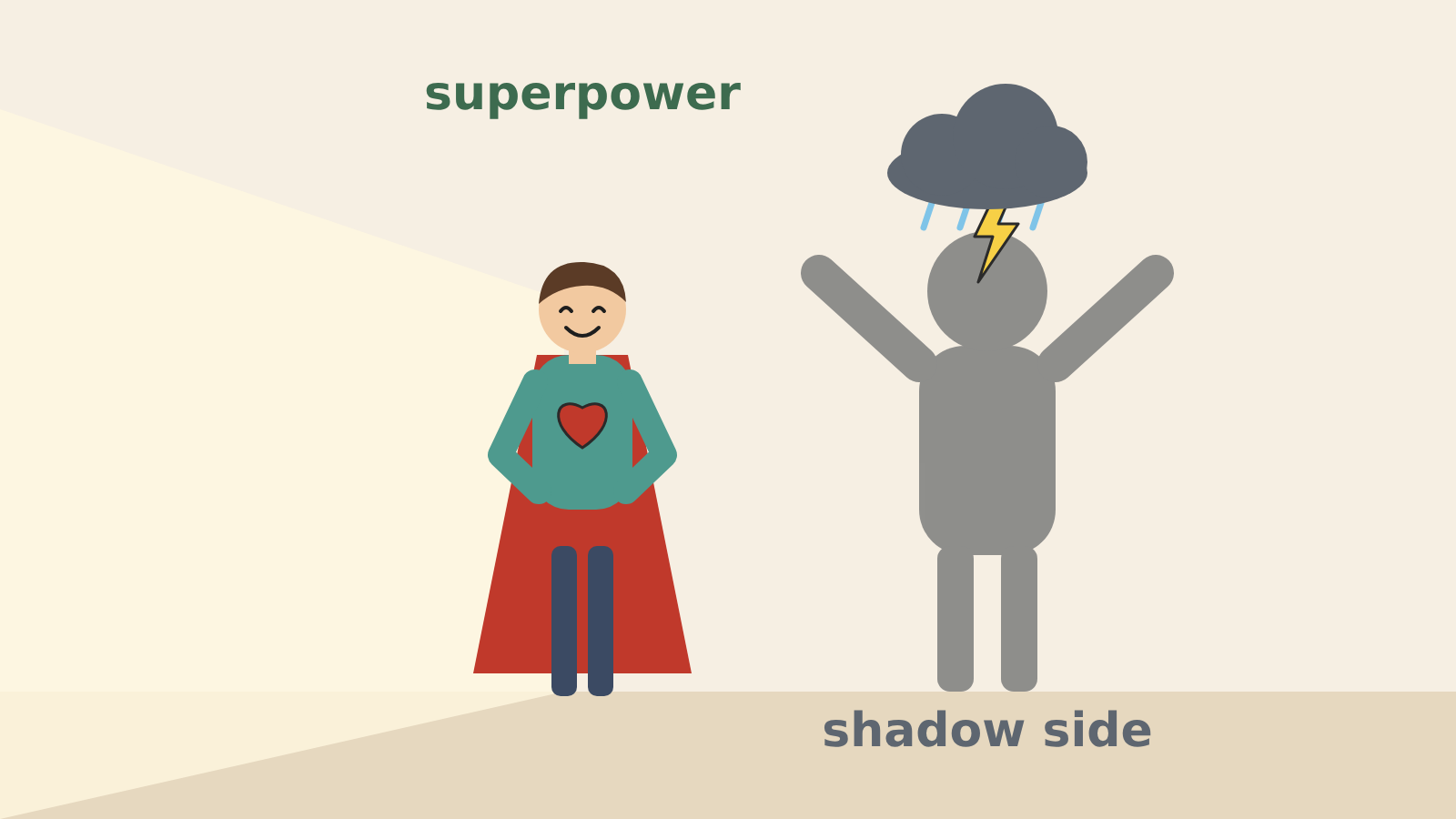
Superpowers and shadow sides
Here's something I've noticed over nearly twenty years of working with business owners. Some of my most successful clients are brilliant at connecting. They can read a room in a heartbeat. Customers love them. Their teams would walk through walls for them.
And every now and then, when a "no" or a silence or a bit of criticism lands, they get hit by a storm.
There's a name for it. Rejection Sensitive Dysphoria, or RSD. A psychiatrist called William Dodson popularised it, and it's widely talked about in ADHD circles. It isn't a formal diagnosis, and the research is still catching up. But the pattern is real enough. A sudden, intense hit of emotion when someone rejects you, criticises you, or you even think they have. A short email, a "not right now", a client who goes quiet for a few days... and it's not a small thing anymore. It's a wave. Shame, self-doubt, sometimes anger, all out of proportion to what actually happened.
Now think about what running a business actually involves. Pitches that get knocked back. Clients who want changes. Staff conversations nobody enjoys. Posting your thoughts on LinkedIn for the world to judge! It's a rejection machine. So the very people who are best at connecting are often the ones who feel every "no" the hardest. Same wiring, both sides.
ADHD is a lot more common among the owners I work with than most people realise. I've written before about the weird menagerie of misfits who build businesses... the different wiring is often the superpower. This is the shadow side of the same thing.
Sandy Hall at re/cognition, a New Zealand leadership and ADHD coach, has just written a book on this called Hyperfocused. It comes from her own lived experience, as an adult with ADHD and as a parent of an ADHD child. If any of this sounds familiar, it's worth a read. (And for those of us who'd rather not read a whole book... she runs a live workshop too.)
The owner who wears his heart on his sleeve
I work with an owner who wears his heart on his sleeve. He's brilliant with people. But every now and then something lands wrong. A pushback in a meeting, a quote that gets knocked back, a team member questioning a decision. And you can see the storm roll in. He goes defensive, then short, then a little angry. Sometimes it blows through in ten minutes. Sometimes he needs a walk on the beach to reset.
The real cost isn't the storm itself, though. It's what it does to his trust in other people.
Whether that's RSD, ADHD or nothing of the sort, I honestly don't know. What I do know is what changed.
We worked through ThinkFeelKnow with his team, a simple way of seeing how each of us takes in information. He's strongly Feel. In that model Feel isn't emotion, it's energy in motion. Once the team could see that, they stopped taking the storm personally. Then we agreed a simple statement that anyone can say to anyone else when things start to heat up. And when it's said, everyone takes a pause.
That's it. One sentence and a pause.
What I didn't expect... it's working for all of them, not just with the MD. Between the other team members as much as with Mr Heart on Sleeve.
Out of reactive, into responsiveness
The trick isn't to switch the storm off. You can't, and you'd lose the superpower if you did. The trick is to recognise it for what it is. A storm, not a verdict.
A decade or two ago I hired a meditation coach. She taught me to step back and observe my emotions as if I was lying on my back looking up at the clouds. Sounds a bit woo woo, I know. But once I got the hang of it, it's been an awesome way of separating me from the reaction. I notice the emotion, watch it, and let it float on by.
That gap between the storm and what you do next is everything. It's the difference between reacting and responding.
It also changes how you read other people. Most of us jump to judgement. She's pushy. He's touchy. They're difficult. Judgement leads to blame, and blame leads to fear. Get curious instead, acknowledge what's actually going on, and you get responsibility and trust.
I wish I'd known that about my expert colleague. I'd have spent a lot less time judging her, and a lot more time actually working with her.
So... what storm might you be misreading right now? Yours, or someone else's?
Good luck out there. And don't forget to have fun!
Ben
Ben Marris is an advisor, coach and mentor to ambitious New Zealand CEOs, leaders and business owners. He has owned businesses and worked with business owners since the turn of the century. He gets leadership teams onto the same picture of where the business is going, then into a plan people actually act on. DM him and he'll set up a call, or have a look at marris.co.nz.
He loves red wine and a good story. He is also dyslexic, so if there are any spelling mistakes or grammatical errors blame his spell check, he does.